The Myth of Sisyphus and Other Essays

Written by a Nobel Prize-winning author

“Thinking is learning all over again how to see, directing one's consciousness, making of every image a privileged place.”

One of the most influential works of this century, The Myth of Sisyphus and Other Essays is a crucial exposition of existentialist thought.

Influenced by works such as Don Juan and the writings of Kafka, Kierkegaard, Schopenhauer, and Nietzsche, these philosophical essays begin with a meditation on suicide; the question of living or not living in a universe devoid of order or meaning.

With lyric eloquence, Albert Camus brilliantly posits a way out of despair, reaffirming the value of personal existence, and the possibility of life lived with dignity and authenticity.

View on Amazon Bookshop.org | SecondSale used book

Poppies of Iraq

Nominated for the Kirkus Prize & YALSA's Great Graphic Novels. Appeared on best of the year lists from Kirkus, Guardian, Vulture, Forbes, and more.

Poppies of Iraq is Brigitte Findakly’s nuanced tender chronicle of her relationship with her homeland Iraq, co-written and drawn by her husband, the acclaimed cartoonist Lewis Trondheim. In spare and elegant detail, they share memories of her middle class childhood touching on cultural practices, the education system, Saddam Hussein’s state control, and her family’s history as Orthodox Christians in the Arab world. 

Poppies of Iraq is intimate and wide-ranging; the story of how one can become separated from one’s homeland and still feel intimately connected yet ultimately estranged.

Signs of an oppressive regime permeate a seemingly normal life: magazines arrive edited by customs; the color red is banned after the execution of General Kassim; Baathist militiamen are publicly hanged and school kids are bussed past them to bear witness. As conditions in Mosul worsen over her childhood, Brigitte’s father is always hopeful that life in Iraq will return to being secular and prosperous. The family eventually feels compelled to move to Paris, however, where Brigitte finds herself not quite belonging to either culture. Trondheim brings to life Findakly’s memories to create a poignant family portrait that covers loss, tragedy, love, and the loneliness of exile.

“What is it like to grow up in Iraq? That’s the question at the heart of Poppies of Iraq... a beautifully drawn graphic novel that shows how growing up in Iraq is more complicated than it seems." —Bitch Magazine

“Poignant and powerful... a meditation on the ache and longing for a place you can no longer return.” —Boston Globe

"Small in size but large in impact, this intimate memoir is a highly relevant and compassionate story of family, community, prejudice, and the struggle to love when the forces of the world push groups apart."—Kirkus

“[Poppies of Iraq's] power lies in the contrast between the matter-of-fact nature of the text and visuals, and the dread and horror of the backdrop... there is also hope to be found here — the hope that, no matter what befalls a nation, there will always be individuals who can craft something beautiful by virtue of their survival.” —Vulture

"This absorbing graphic memoir offers an insider’s view of the rapid cultural changes that beset Iraq in the latter half of the 20th century... Short vignettes about her family, school, and local customs are alternately bittersweet, funny, and affecting as a series of military and political coups impact her family’s life in Iraq... A moving, thought-provoking title for all collections."—School Library Journal, Starred Review

View on Amazon Bookshop.org | SecondSale used book

The Wall

A NY Times Bestseller & multi award-winning book

”I was born at the beginning of it all, on the Red side—the Communist side—of the Iron Curtain." Through annotated illustrations, journals, maps, and dreamscapes, Peter Sís shows what life was like for a child who loved to draw, proudly wore the red scarf of a Young Pioneer [a youth Marxist-Leninist organization in communist Czechoslovakia], stood guard at the giant statue of Stalin, and believed whatever he was told to believe. But adolescence brought questions. Cracks began to appear in the Iron Curtain, and news from the West slowly filtered into the country. Sís learned about beat poetry, rock 'n' roll, blue jeans, and Coca-Cola. He let his hair grow long, secretly read banned books, and joined a rock band. Then came the Prague Spring of 1968, and for a teenager who wanted to see the world and meet the Beatles, this was a magical time. It was short-lived, however, brought to a sudden and brutal end by the Soviet-led invasion. But this brief flowering had provided a glimpse of new possibilities—creativity could be discouraged but not easily killed.

By joining memory and history, Sís takes us on his extraordinary journey: from infant with paintbrush in hand to young man borne aloft by the wings of his “glorious artwork” (Elle) which “makes for irresistible reading.” (Washington Post Book World)

“A masterpiece for readers young and old.” —Starred, Kirkus Reviews

“A powerful combination of graphic novel and picture book . . . Terrific design dramatizes the conflict between conformity and creative freedom.” —Starred, Booklist

“Sís, who has entranced children and adults with his magical stories and drawings, has taken his talent to a new level. Peter, born to dream and draw, is now also teaching the tragic history of his native land under communism in this beautiful, poignant, and important work for those of all ages. ” —Madeleine Albright, former U.S. Sec of State

(A special thank you to book club member, Sarah Jean for the book suggestion.)

View on Amazon Bookshop.org | SecondSale used book

Note: Whether you read the book with a child or on your own, it’s a quick read so we added on a 29-minute dramatic Czech film nominated for an Academy Award entitled “Most” aka “The Bridge”. (Free on YouTube with closed captions here.)

Trailer:

Click here to watch movie for free on youtube us

Bringing Up Girls in Bohemia

This slim but dense novel is the story of a middle-aged teacher who is employed by a local Mafia boss to teach his drop-out 20-year-old daughter some creative writing.

Beata embraces lover after lover as well as political causes new to Eastern Europe: the environment, animal rights, feminism, consumerism, new-age religion. The book gives a gritty but witty portrait of today's Prague, its mafiosi and their ex-secret police bodyguards, the expatriate Americans, and many an extraordinary Czech, from a cremation enthusiast to a hopelessly naïve sex-education teacher.

The narrator, himself a writer and teacher who is in love with Beata, must portray her fate in terms that explain her nihilism without losing faith in his own positive craft of story-telling.

The unusual structure of the book, with its many post-modernist quotes from other writers, also serves as a serious exploration of the changed role of the writer in Central and Eastern Europe today. This comical-tragical-sexual tale is told in the best Czech tradition of Milan Kundera, Ivan Klíma, Bohumil Hrabal and Ludvík Vaculík.

“Brilliant satire of modern-day Prague.” —ALA Booklist

(Group read suggestion from Mia DeGiovine Chaveco, book club co-founder.)

View on Amazon | Bookshop.org | SecondSale used book

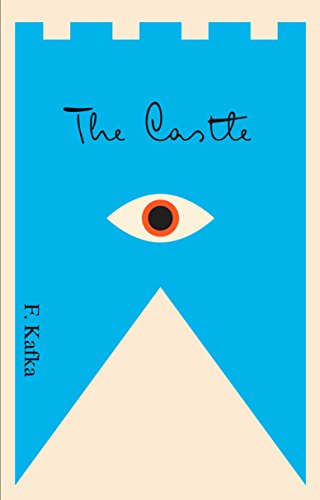
The Castle

Kafka's final novel was written during 1922, when the tuberculosis that was to kill him was already at an advanced stage. Left unfinished by Kafka and not published until 1926, two years after his death, The Castle is the haunting tale of K.’s relentless, unavailing struggle with an inscrutable authority in order to gain access to the Castle.

Scrupulously following the fluidity and breathlessness of the sparsely punctuated original manuscript, Mark Harman’s new translation reveals levels of comedy, energy, and visual power previously unknown to English language readers.

Like much of Kafka's work, The Castle is enigmatic and polyvalent. Is it an allegory of the sprawling Austro-Hungarian Empire as it disintegrates into modern nation states, or a quasi-feudal system giving way to a new freedom for the subject? Is it the search by a central European Jew for acceptance and integration into a dominant culture? Is it a spiritual quest for grace or salvation, or an individual's struggle between his sense of independence and his need for approval? Is K. is an opportunist, a victim, or an outsider battling against an elusive authority? Is the Castle a benign source of authority or a whimsical system of control?

Like K., the reader is presented with conflicting perspectives that rehearse the existential dilemmas and uncertainties of literary modernity.

“[Harman’s translation is] semantically accurate to an admirable degree, faithful to Kafka’s nuances, and responsive to the tempo of his sentences and to the larger music of his paragraph construction. For the general reader or for the student, it will be the translation of preference for some time to come.” —The New York Review of Books

Note: The translation by Mark Harman is the one we recommend.

(Group read suggestion from Mia DeGiovine Chaveco, book club co-founder.)

View on Amazon | Bookshop.org | SecondSale used book

Helga’s Diary

Anne Frank's harrowing account finished before the concentration camp. This remarkable diary by a teenage girl takes readers inside.

Alongside her father and mother and the 45,000 Jews who live in Prague, Helga endures the Nazi invasion and regime: her father is denied work, schools are closed to her, she and her parents are confined to their flat. Then deportations begin, and her friends and family start to disappear.

In 1941, Helga and her parents are sent to the concentration camp of Terezín, where they live for three years. Here Helga documents their daily life—the harsh conditions, disease and suffering, as well as moments of friendship, creativity and hope—until, in 1944, they are sent to Auschwitz. Helga leaves her diary behind with her uncle, who bricks it into a wall to preserve it.

Helga's father is never heard of again, but miraculously Helga and her mother survive the horrors of Auschwitz, the grueling transports of the last days of the war, and manage to return to Prague. Helga writes down her experiences since Terezín, completing the diary. Out of the 15,000 children interred in Terezin, she is 1 of just 132 children who survived.

Reconstructed from her original notebooks, which were later retrieved from Terezín, and from the loose-leaf pages on which Helga wrote after the war, the diary is presented here in its entirety, accompanied by an interview with Helga and illustrated with the paintings she made during her time at Terezín. As such, Helga's Diary is one of the most vivid and comprehensive testimonies written during the Holocaust ever to have been recovered.

“The most moving Holocaust diary published since Anne Frank.” —The Telegraph

“A breathtaking account…a chilling testament to the tragedy of the Holocaust.”
Publishers Weekly

“What's startling throughout is the resilience with which her buoyant spirit keeps bobbing up past the hardships, indignities, and cruelties.” —Francine Prose

“Page after page of writing that candidly, expertly, showcases humanity at its best and its worst.” —The Rumpus

(Group read suggestion from Beth McCrea, book club co-founder.)

View on Amazon Bookshop.org | SecondSale used book

My Crazy Century

Ivan Klíma, “a writer of enormous power and originality” (The NY Times Book Review), has penned an intimate autobiography that explores his life under Nazi and Communist regimes. More than a memoir, My Crazy Century explores the ways in which the epoch and its dominating totalitarian ideologies impacted the lives, character, and morality of Klíma’s generation.

Klíma’s story begins in the 1930s, in the Terezin concentration camp outside of Prague, where he was forced to spend almost four years of his childhood. These political events form the backdrop to Klíma’s personal experiences, with the arrest and trial of his father; the early revolt of young writers against socialist realism; his first literary successes; and his travels to the free part of Europe, which strengthened his awareness of living as part of a colossal lie.

Klíma also captures the brief period of liberation during 1968’s Prague Spring, in which he played an active role; the Soviet invasion that crushed its political reforms; the rise of the dissident movement; and the collapse of the Communist regime in the middle of the Velvet Revolution of 1989.

“[An] absorbing memoir . . . The author relates all this with a mordant humor and a limpid prose that registers both the overt fear that repression engenders and the subtler moral corruptions it works in victims and perpetrators. . . . Klíma’s searching exploration of a warped era is rich in irony—and dogged hope.” —Publishers Weekly

My Crazy Century is the prizewinning memoir of a writer who, deprived of freedom for much of this life, never ceased to be free in his imagination, creativity, and art. Neither Nazi nor Communist rulers could rob Ivan Klíma of his amazing ability—and fierce determination—to distill drops of truth from the sea of experience. Klíma was a witness, and participant, in the most dramatic events in twentieth century Europe. This is his story, brilliantly, wittily and poignantly told.” —Secretary Madeleine Albright

(Group read suggestion from Beth McCrea, book club co-founder.)

Note: Because this book is longer than our usual reads, an additional month will be given to read it if it is chosen.

View on Amazon | Bookshop.org | SecondSale used book

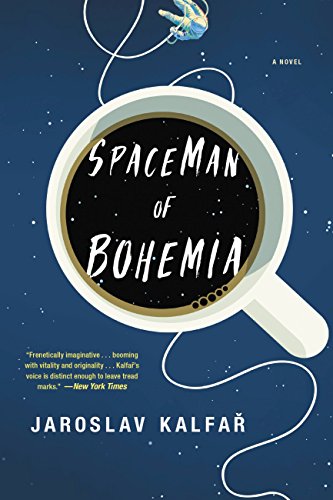
Spaceman of Bohemia

“A love song to Prague....Funny, humane and oddly down-to-earth in ways that its scenario cannot possibly convey. With its lessons in Czech history/culture and interplanetary shenanigans, this zany satirical debut is bursting at the seams and should win many fans.” (Guardian)

Orphaned as a boy, raised in the Czech countryside by his doting grandparents, Jakub Prochvozka has risen from small-time scientist to become the country's first astronaut. When a dangerous solo space mission offers him both the chance at heroism he's dreamt of, and a way to atone for his father's sins as a Communist informer, he ventures boldly into the vast unknown. But in so doing, he leaves behind his devoted wife, Lenka, whose love, he realizes too late, he has sacrificed on the altar of his ambitions.

Alone in deep space, Jakub discovers a possibly imaginary giant alien spider, who becomes his unlikely companion. Over philosophical conversations about the nature of love, life and death, and the deliciousness of bacon, the pair form an intense and emotional bond. Will it be enough to see Jakub through a clash with secret Russian rivals and return him safely to Earth?

Rich with warmth and suspense and surprise, Spaceman of Bohemia is an exuberant delight from start to finish. Very seldom has a novel this profound taken readers on a journey of such boundless entertainment and sheer fun.

”In Kalfar's zany novel . . . the spaceman, the alien, and the rest of the book's extravagant conceptual furniture are merely metaphors for the human-scale issues that are its real concerns, in particular the collapse of Jakub's marriage. That's not to say Kalfar hasn't done his research. There are lovingly detailed passages on life in zero gravity, but all the whizzy space business is harnessed to the basic question of what it means to leave and whether it's possible to come back. The alien acts as a Proustian trigger for Jakub's memories . . . But for all the strangeness of outer space, it is the writing about his home, the place to which he longs to return and perhaps never can, that beats strongest in this wry, melancholy book.” —NY Times Book Review

”The best, most enjoyably heartbreaking, most fun book you'll read this year. On the surface, you'll see affinities with Gary Shteyngart, with The Martian, with Kelly Link. But Jaroslav Kalfar's voice is entirely his own. I beg you: take this strange, hilarious, profound, life-affirming trip into literary outer space.” —Library Journal

(A special thank you to book club member, Elke Richelsen for the suggestion.)

View on Amazon Bookshop.org | SecondSale used book

Amora

Sweeping nearly every major Brazilian literary prize in 2016—including the Prêmio Jabuti and Prêmio Açorianos de Literatura—Amora has propelled Natália Borges Polesso to the forefront of the international literary world.

From an emerging talent comes an exquisite collection of stories exploring the complexity of love between women.

Amora dares explore the way women love each other—the atrophy and healing of the female spirit in response to sexual desire and identity. These thirty-three short stories and poems, crafted with a deliberate delicacy, each capture the candid, private moments of women in love.

Together, these stories and the women who inhabit them reveal an illuminating portrait of the sacred female romance, with all its nuances, complexities, burdens, and triumphs revealed. These pages are adorned with a mosaic of unforgettable moments, including a lesbian granddaughter discovering unexpected commonalities with her grandmother, a teenager’s tryst with her friend after disenchanting sex with a boy, and an old couple’s dreamy Sunday-morning ritual.

View on Amazon | Bookshop.org | SecondSale used book

First Spring Grass Fire

Lambda Literary Award Finalist

Transgender indie electronica singer-songwriter Rae Spoon has six albums to their credit, including I Can't Keep All of Our Secrets. This first book by Rae (who uses “they” as a pronoun) is a candid, powerful story about a young person growing up queer in a strict Pentecostal family in Alberta.

The narrator attends church events and Billy Graham rallies faithfully with their family before discovering the music that becomes their salvation and means of escape. As their father's schizophrenia causes their parents' marriage to unravel, the narrator finds solace and safety in the company of their siblings, in their nascent feelings for a girl at school, and in their growing awareness that they are not the person their parents think they are. With a heart as big as the prairie sky, this is a quietly devastating, heart-wrenching coming-of-age book about escaping dogma, surviving abuse, finding love, and risking everything for acceptance.

“First Spring Grass Fire will be meaningful to anyone who has struggled to fit in. By telling these stories—of being different, queer, raised in a rigid belief system you didn't choose, trying to be yourself within circumstances you can't control—Rae Spoon illustrates the triumph in reclaiming and controlling your own identity. This moving collection is a story of what we do to find a place, physical or intangible, that we can call home.” —National Post

“The prose is concise without ornamentation; emotionally moving because of its raw honesty. While issues of gender and sexuality certainly underline the majority of the narrator's existential despair, the book works because it pushes the reader to understand the humanity of the narrator rather than simply a trans or lesbian narrative. It demonstrates the commonality of grief, loss, fear, pain, love, and longing.”
Lambda Literary

View on Amazon | Bookshop.org | SecondSale used book
Under My Skin


Min Lee is a workaholic who can’t say no. She substitutes sleep with Red Bull and, through a combination of repression and bad habits, has managed to score herself a luxury apartment, a fabulous boyfriend and the approval of her billionaire CEO. Things are looking pretty awesome… well, apart from those body image issues that constantly plague her.

But Min thinks she's got everything worked out. She's arranged her comfort zone and has zero desire to look outside of it… or, so she tells herself.

It’s not until a troubled schoolgirl tracks her down from the Internet, stalks her to her home and noses her way into life that Min begins to admit that something is wrong in her perfect world. Something that she's never thought about before, and doesn’t even want to think about. Something that has the power to ruin all her relationships and dismantle everything in her life she’s worked so very hard for.

What if “she” isn’t the right word for Min at all?

“When was the last time a book hooked you so deeply you actually worried about the characters when you weren't reading? I didn’t want this book to end!” —Olin Elliott

View on Amazon | Bookshop.org | SecondSale used book

Our Lives Our Words

“Fear. I was scared to walk on the road for fear of people recognizing me. I was afraid the police might arrest me. I avoided taking the bus, not sure whom I could sit next to. I was scared to use the public toilet for fear that people might know my difference. I was scared that rotten tomatoes might hit me in the market. I was scared of falling in love for fear of being hit hard.”

The stories in this landmark volume chronicle, in their own words, the lives of aravanis* with narratives of pain and courage, of despair and triumph.

Aravanis have long been the invisible yet hyper-visible subjects of a societal gaze that reduces them to stereotype. Imagined as often as looked at or talked about, simultaneously revered and cursed, they have, in the process, been refused individual histories, lives and identities, even selves. Yet the community continues to challenge and subvert this view, persistently refusing to allow itself to be shamed or victimized. Some of the greatest recent victories in this ongoing battle for rights have been won in Tamil Nadu (a state in southern India), where the government first began to recognize many of the rights of the hijra community.

These stories are amongst the first accounts of hijra lives to be produced entirely by the members of the community themselves.

*As Identiversity notes, “nonbinary identities may seem like a new phenomenon in Western culture, but that’s not the case in other parts of the world. In India, a third gender identity known as hijra (or aravani in Tamil Nadu) has been intertwined with Indian culture for thousands of years, with hijras holding a prominent place in some of the most significant ancient Hindu texts.

Prior to British rule, hijras enjoyed a degree of acceptance in Indian society, playing a key role in celebrations. However, the colonial era was marked by criminalization and persecution, and today’s hijras—which include people who are intersex, transgender, and eunuchs—continue to occupy an uneasy space in Indian culture. Many are forced to eke out a living through begging or functioning as sex workers.

Efforts to gain legal protections took a significant step forward in 2014, when the Supreme Court of India officially recognized hijras as a third gender.

View on Amazon | Unavailable via Bookshop.org | SecondSale used book

I Hope We Choose Love

American Library Association Stonewall Book Awards Honor Book & Winner, Publishing Triangle Award for Trans and Gender-Variant Literature

What can we hope for at the end of the world? What can we trust in when community has broken our hearts? What would it mean to pursue justice without violence? How can we love in the absence of faith?

In a heartbreaking yet hopeful collection of personal essays and prose poems, blending the confessional, political, and literary, acclaimed poet and essayist Kai Cheng Thom dives deep into the questions that haunt social movements today. With the author's characteristic eloquence and honesty, I Hope We Choose Love proposes heartfelt solutions on the topics of violence, complicity, family, vengeance, and forgiveness. Taking its cues from contemporary thought leaders in the transformative justice movement such as Adrienne MareeBrown and Leah Lakshmi Piepzna-Samarasinha, this provocative book is a call for nuance in a time of political polarization, for healing in a time of justice, and for love in an apocalypse.

“In this brave and skillfully written collection of essays, Kai Cheng Thom dares to be really honest—to write truths that go beyond easy orthodoxy to her and our own messy, complex, real stories. As a suicide survivor and someone who does work around suicide in queer and femme communities, I deeply appreciate her clarity about how suicide shows up in queer and trans communities and the ways in which social justice, queer, trans and/or Black and brown communities turn on and hurt each other while trying to keep ourselves safe. This is a brave book, and an essential text for everyone trying like hell to create something that will come after the end of the world. Read it, and prepare to have your mind challenged and opened.” —Leah Lakshmi Piepzna-Samarasinha, author of Care Work: Dreaming Disability Justice

View on Amazon | Bookshop.org | SecondSale used book
Little Fish

Winner, Lambda Literary Award; Amazon Canada First Novel Award; Firecracker Award for Fiction; A Globe and Mail Best Book of the Year

It's the dead of winter in Winnipeg and Wendy Reimer, a thirty-year-old trans woman, feels like her life is frozen in place. When her Oma (grandmother) passes away, Wendy receives an unexpected phone call from a distant family friend with a startling secret: Wendy's Opa (grandfather)—a devout Mennonite farmer—might have been transgender himself. At first she dismisses this revelation, but as Wendy's life grows increasingly volatile, she finds herself aching for the lost pieces of her Opa's truth.

But this isn’t a story about her Opa. It’s a slice-of-life story about Wendy. Alternately warm-hearted and dark-spirited, desperate and mirthful, Little Fish explores the winter of discontent in the life of one transgender woman as her past and future become irrevocably entwined.

“I have never felt as seen, understood, or spoken to as I did when I read Little Fish. Never before in my life. Casey remains one of THE authors to read if you want to understand the interior lives of trans women in this century.” —Meredith Russo, author of If I Was Your Girl

“A touching and beautiful novel.” —The Independent (UK)

View on Amazon | Bookshop.org | SecondSale used book

The Archer

From the #1 best-selling author of The Alchemist comes an inspiring story about a young man seeking wisdom from an elder, and the practical lessons imparted along the way. Includes stunning illustrations by Christoph Niemann.

In The Archer we meet Tetsuya, a man once famous for his prodigious gift with a bow and arrow but who has since retired from public life, and the boy who comes searching for him. The boy has many questions, and in answering them Tetsuya illustrates the way of the bow and the tenets of a meaningful life. Paulo Coelho’s story suggests that living without a connection between action and soul cannot fulfill, that a life constricted by fear of rejection or failure is not a life worth living. Instead one must take risks, build courage, and embrace the unexpected journey fate has to offer.

With the wisdom, generosity, simplicity, and grace that have made him an international best seller, Paulo Coelho provides the framework for a rewarding life: hard work, passion, purpose, thoughtfulness, the willingness to fail, and the urge to make a difference.

“A novelist who writes in a universal language.” —The New York Times

“[Coelho’s] books have had a life-enhancing effect on millions of people.” —The Times (London)
 
“His writing is like a path of energy that inadvertently leads readers to themselves, toward their mysterious and faraway souls.”  —Le Figaro

View on Amazon | Bookshop.org | SecondSale used book

It was Only Yesterday

It was Only Yesterday is an insider's story about life as a royal teenager and growing up in the Jubilee Palace in Africa’s first royal family under the protective eyes of her great grand-father Emperor Haile Selassie I, King of Kings, Lion of Judah, and Elect of God. In February 1974, her privileged life comes to an abrupt end with the advent of a bloody upheaval which overthrows her great grand-father’s government and lands her mother and close family in a rotting Communist jail. By this time, Hannah Mariam has fled to United Kingdom where she is granted status as a refugee.

Interested in writing from a very young age, her first book It was Only Yesterday offers unique insights about the hardship she faced growing up in a new setting and how she effectively managed change and uncertainty. It was Only Yesterday is a delightful account of her interactions with friends and family in the backdrop of the intricate world of imperial protocol and palace politics. The book’s narrative is based on diaries kept over the past forty-three years, a collection of family photographs, informal chats and interviews, generational stories, and researching academic books about her great grand-father and family. A promising new author, her readers will enjoy how she has interwoven personal experiences with firsthand knowledge of her great grand-father, one of the world’s longest reigning monarchs and an important historical figure in Ethiopian, African and world history. The book’s memoir genre will appeal to all, in particular to those interested in understanding the cultural, social, political and historical ramifications of pre-socialist Ethiopia of 1974.

View on Amazon | Bookshop.org | SecondSale used book

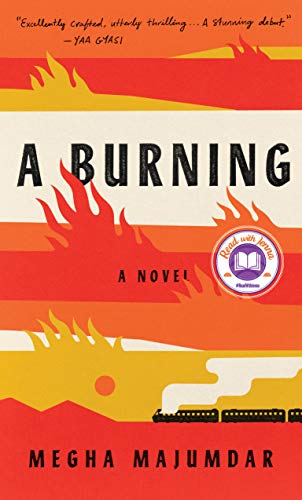
A Burning

For readers of Tommy Orange, Yaa Gyasi, and Jhumpa Lahiri, an electrifying debut novel about three unforgettable characters who seek to riseto the middle class, to political power, to fame in the moviesand find their lives entangled in the wake of a catastrophe in contemporary India.

In this National Book Award Longlist honoree and “gripping thriller with compassionate social commentary” (USA Today), Jivan is a Muslim girl from the slums, determined to move up in life, who is accused of executing a terrorist attack on a train because of a careless comment on Facebook. PT Sir is an opportunistic gym teacher who hitches his aspirations to a right-wing political party, and finds that his own ascent becomes linked to Jivan’s fall. Lovelyan irresistible outcast whose exuberant voice and dreams of glory fill the novel with warmth and hope and humorhas the alibi that can set Jivan free, but it will cost her everything she holds dear.

Taut, symphonic, propulsive, and riveting from its opening lines, A Burning has the force of an epic while being so masterfully compressed it can be read in a single sitting. Majumdar writes with dazzling assurance at a breakneck pace on complex themes that read here as the components of a thriller: class, fate, corruption, justice, and what it feels like to face profound obstacles and yet nurture big dreams in a country spinning toward extremism. An extraordinary debut.

“Powerful… propulsive…This is a book to relish for its details, for the caress of the writer’s gaze against the world.” —The New York Times

“A gripping thriller with compassionate social commentary… It’s hard not to feel intense heartache while reading A Burning. Majumdar’s powerful debut is carefully crafted for maximum impact, carving out the most urgent parts of its characters for the whole world to see. This novel rightfully commands attention.” —USA Today

View on Amazon | Bookshop.org | SecondSale used book

Zorba the Greek

A stunning new translation by Peter Bien of the classic book brings the clarity and beauty of Kazantzakis’ language and story alive.

First published in 1946, Zorba the Greek, is, on one hand, the story of a Greek working man named Zorba, a passionate lover of life, the unnamed narrator who he accompanies to Crete to work in a lignite mine, and the men and women of the town where they settle. On the other hand it is the story of God and man, the Devil and the Saints; the struggle of men to find their souls and purpose in life and it is about love, courage and faith.

Zorba has been acclaimed as one of the truly memorable creations of literature—a character created on a huge scale in the tradition of Falstaff and Sancho Panza. His years have not dimmed the gusto and amazement with which he responds to all life offers him, whether he is working in the mine, confronting mad monks in a mountain monastery, embellishing the tales of his life or making love to avoid sin. Zorba’s life is rich with all the joys and sorrows that living brings and his example awakens in the narrator an understanding of the true meaning of humanity. This is one of the greatest life-affirming novels of our time.

Part of the modern literary canon, Zorba the Greek, has achieved widespread international acclaim and recognition. This new edition translated directly from Kazantzakis’ Greek original by Peter Bien is a more faithful rendition of the original language, ideas, and story, and presents Zorba as the author meant him to be.

(A special thank you to book club member, Beth Cummings for the suggestion.)

Note: While there is another translation of this book, this particular translation by Peter Bien is the one we recommend. It’s a direct translation from Greek to English instead of the previous version which translated the Greek into French before translating the French into English introducing a wide variety of mistakes.

View on Amazon | Bookshop.org | SecondSale used book

Austerity Measures

A remarkable collection of poetic voices from contemporary Greece, Austerity Measures is a one-of-a-kind window into the creative energy that has arisen from the country’s decade of crisis and a glimpse into what it is like to be Greek today.

The 2008 debt crisis shook Greece to the core and went on to shake the world. More recently, Greece has become one of the main channels into Europe for refugees from poverty and war. Greece stands at the center of today’s most intractable conflicts, and this situation has led to a truly extraordinary efflorescence of innovative and powerfully moving Greek poetry. Karen Van Dyck’s wide-ranging bilingual anthology—which covers the whole contemporary Greek poetry scene, from literary poets to poets of the spoken word to poets online, and more—offers an unequaled sampling of some of the richest and most exciting poetry of our time.

“It was no more than two or three poems in before I started to sense the book’s atmosphere, to see it as an uncommon chance to share Greek experience beyond the headlines—in a way that is fascinating, revelatory and only possible through poetry. Most poems here do not overtly address the crisis. But the collective spirit is new-minted, unmediated and bracing (the quality of translation high).” —The Observer

“The light these poets work in, and the language they speak, are still the light and the language of Homer and the great tragedians. The wonderfully inventive translations reveal a different Greece to English readers: one that does not cancel the past but builds upon it.” —Ruth Padel, award-winning British poet and author

(Group read suggestion from Julie Jacobs, book club moderator.)

View on Amazon | Bookshop.org | SecondSale used book

Better Dead than Divorced

Winner of 8 national awards

A romance.
A forced marriage.
A scandalous affair.
A hit man.
A true story.

“I tried to open my eyes, hoping to stir up enough courage to face the frightening commotion just outside our window. It was no use. My imagination ran wild as I conjured up all kinds of horrors unfolding out in the darkness.” These are the words of a young boy living in a small Greek mountain village in the 1950s trying to understand the booming noises out in the night that turned out to be gunshots. It’s a defining moment from Better Dead than Divorced. The boy is Lukas Konandreas, the author of this true story about the forced marriage and murder of Panayota, his father’s cousin.

Even after becoming a doctor and then immigrating to the US, Konandreas remained haunted by what happened in his village so long ago. “It has taken me years to piece together this story,” says Konandreas. “I didn’t want filial love to blind me to the truth, but my family reacted strongly to my research. ‘It’s a story that must be told,’ some said, ‘for Panayota if for no other reason.’ Others were less supportive. ‘Leave the dead alone,’ they said. ‘Let them lie peacefully in the cemetery of St. Anthony.’”

But needing to know what happened, Konandreas went on to conduct more than 160 interviews along with painstaking research of historic court records and old newspaper accounts to discover all the details.

Hollywood could not invent a better antagonist than George Nitsos. Outwardly, he had it all—good looks, money, charisma, power, and influence—while Panayota was a young village beauty. When it was discovered that George had taken Panayota’s virginity, her family, led by the author’s father, forces George to marry the girl. Yet the other village girls still could not resist George’s boyish charms. And he certainly wasn’t going to let marriage stand in the way of his indiscretions. Friends encouraged Panayota to leave George, but she felt this would bring shame to her. “Better dead than divorced,” she’s quoted as saying. And dead is how she ends up, killed by a hired hit man. But the story doesn’t end there as the author’s father driven by honor and conscience fights beyond his modest means to seek justice in a corrupt system.

Romance. Marriage. Scandal. Murder. The pursuit of justice. Sometimes, the truth is stranger and more compelling than fiction.

(Group read suggestion from Beth McCrea, book club co-founder.)

View on Amazon | Bookshop.org | SecondSale used book